Travellers waited about a month for refunds because every request passed through manual checks between two teams. Redesigning the back-office workflow brought that down to about a week.
The problem
A refund took about a month to reach the traveller, because Customer Service and Finance handled every request by hand.
My role
UX Designer. I worked with the PM, the Finance and Customer Service teams, and engineering.
What I did
Shadowed and interviewed both teams, mapped the process, and designed a new workflow and an internal refund dashboard over 4 iterations.
Outcome
Refunds reach travellers in about a week instead of a month: 76% faster.
Timeline
1.5 months, 2022
Users
Internal: Finance and Customer Service teams
Methods
Shadowing, interviews, process mapping, co-design sessions
The short version
Video · The whole project in about 85 seconds, narrated
Why this mattered
A refund usually follows a cancelled flight, hotel or train: a moment when the traveller is already let down. Waiting about a month for their money turned one bad experience into two, and every slow refund meant more follow-up for the teams handling it.
The work behind each refund was almost entirely manual. That made it slow, and every manual step was another chance for a mistake.
Where the month went
I shadowed the Finance and Customer Service teams and mapped a refund from request to payout. The delay wasn't one slow step; it was the manual work between steps.
The old process. Red steps were done by hand: Finance sorted and checked every request, and Customer Service chased travellers to fix their data.
Customer Service created each refund request by hand, then contacted users to validate their details.
Finance sorted and grouped the requests by payment method, then checked every request's data one by one before approving.
Neither team could easily see where a refund was, so requests stalled between them.
Three decisions
Decision 01
Let the system do the sorting
Situation
Finance spent its time grouping requests by payment method before any real checking started.
Instead of
Give Finance a better spreadsheet or filters.
Why
Grouping follows fixed rules, so it doesn't need a person. Removing it frees Finance for the checks that do.
Result
The new flow groups requests by payment method automatically.
Decision 02
Ask the traveller directly, not through a person
Situation
Customer Service had to contact users one by one to confirm their refund details.
Instead of
Add a checklist to make the manual follow-up faster.
Why
The traveller is the person who knows their details. Asking them directly removes a round trip between two people.
Result
The system now contacts users to validate their data, a step that used to be manual.
Decision 03
One dashboard both teams share
Situation
Refunds stalled because neither team could see where a request was.
Instead of
Separate tools for each team, with handoffs over chat.
Why
A shared view of every refund and its status removes the “where is this one?” questions between teams.
Result
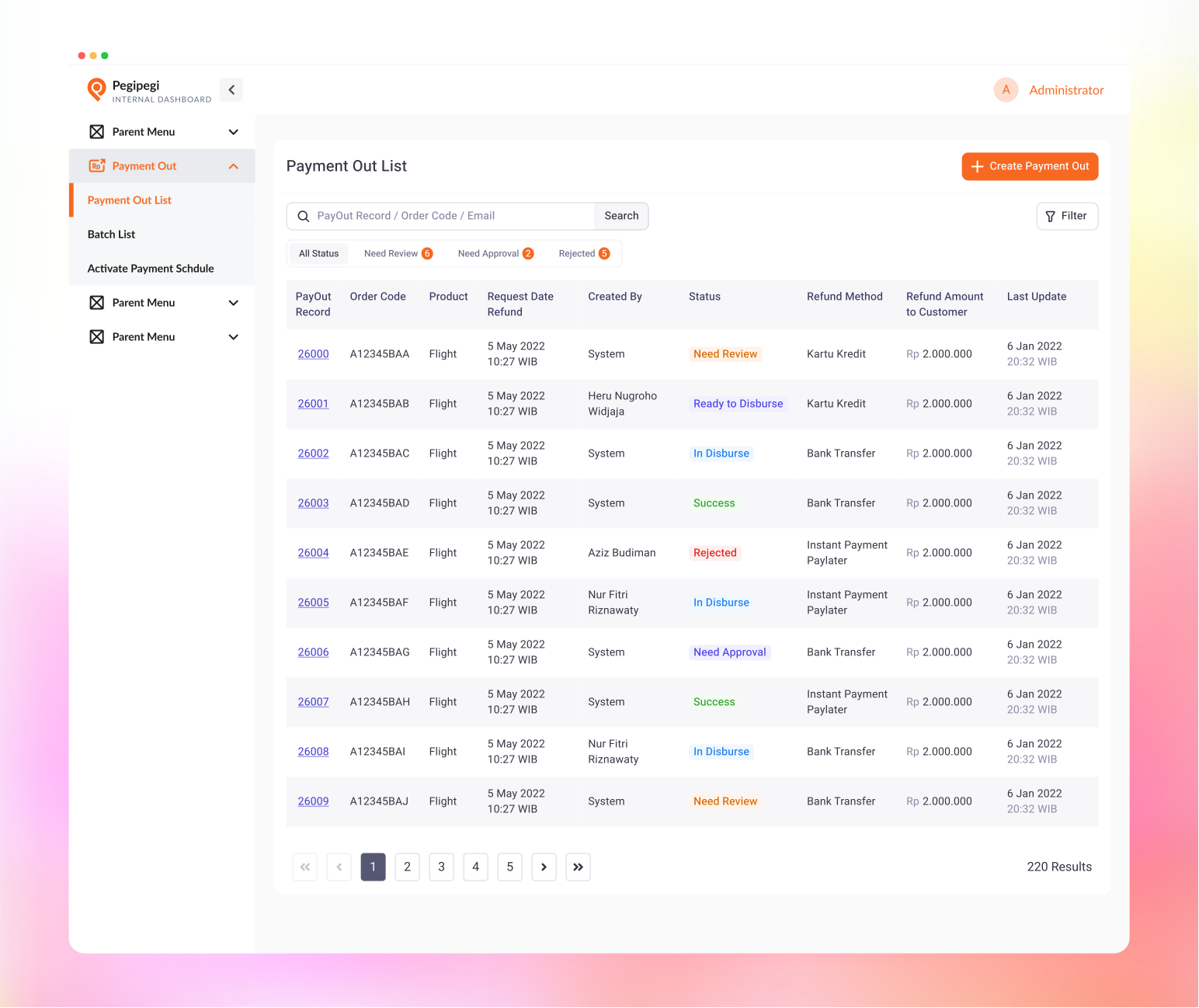
A payment-out dashboard listing every refund, its status and the next action.
The new process. Green steps are automated: entry auto-fills, the system groups requests and asks travellers to confirm their own details. Finance still checks each request.
Getting both teams on board
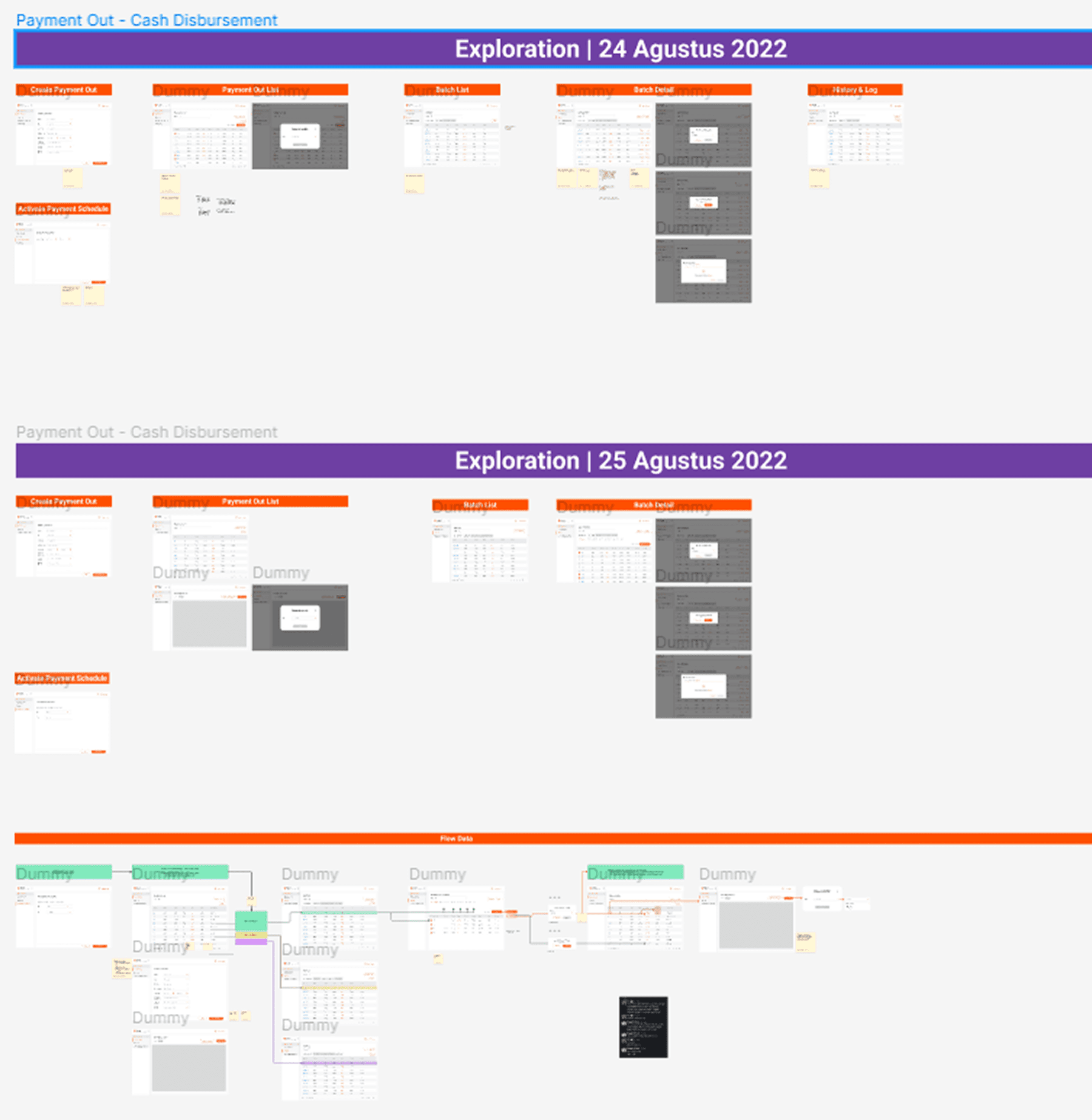
Back-office changes fail when the people doing the work don't trust them. I ran brainstorming sessions with Finance, Customer Service and product, then took the design through 4 rounds of feedback with the PM and both teams until the concept was approved.
Two days of dashboard explorations, August 2022.
Impact
1 mo → 1 wk
for a refund to reach the traveller (approx.)
76%
faster
From someone who was there
Athur MuharamWorked with Raam at Pegipegi
“I highly recommend Raam as a diligent product designer. His strong user-centric mindset and attention to detail result in intuitive designs. He integrates user needs seamlessly and embraces feedback, making him a valuable team player and asset in product design.”
What I'd do differently
Measure more than speed. Tracking errors and refund-related contacts would show the full effect on both teams and travellers.
Treat internal tools like products. The people using them every day are users too, and their speed becomes the customer's experience.